
Precision Metal Processing
Integrating years of experience, we utilize precision machining to achieve high-precision stamping and die casting.
Key differences between stamping and die casting
Precision metal stamping
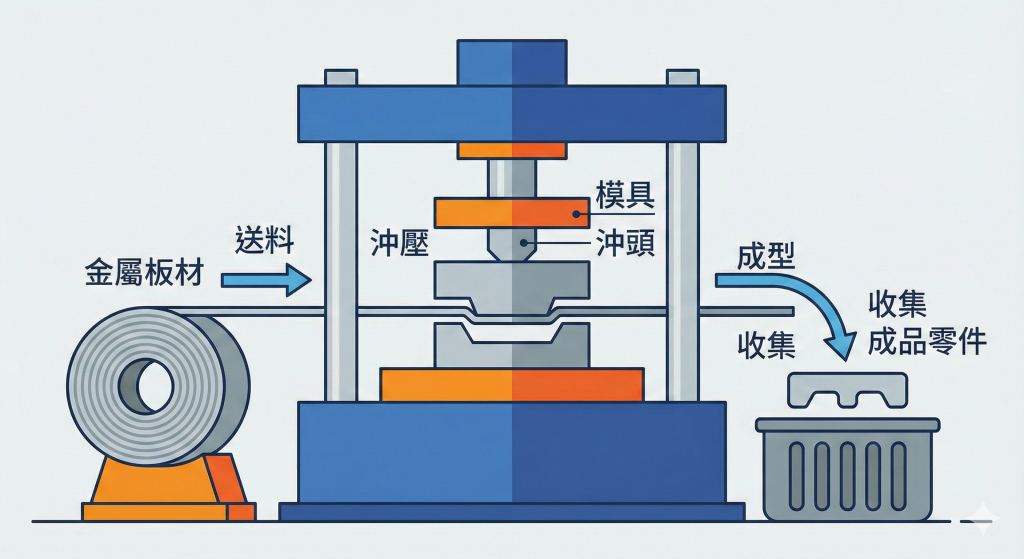
Metal Stamping Is a technology that uses a “punch press” and a “die” to apply enormous pressure to a metal sheet, causing it to be cut, bent or stretched into shape in an instant.
Simply put, its principle is similar to using a cookie cutter to shape a flat metal sheet into the desired three-dimensional shape. Because it is usually carried out at room temperature (cold working), it has the characteristics of extremely fast production speed, high precision and stable quality, making it one of the most core processes in manufacturing automotive sheet metal, electronic components and hardware fasteners.
The parts have better strength and toughness.
Stamping is a cold working process that preserves the internal fiber flow of the metal material and can even increase strength through work hardening. In contrast, die casting, due to the injection of liquid, is prone to the formation of tiny pores, resulting in a more brittle structure and making it unsuitable for welding.
A wider range of material choices
Stamping is applicable to almost all ductile metals, including high-strength steel, stainless steel and titanium alloys; while die casting is limited by melting point and can only use low-melting-point alloys such as aluminum, zinc and magnesium, and cannot process steel materials.
Faster production cycle and lower cost
For parts of uniform thickness, stamping production speeds are typically measured in seconds (or even several pieces per second), far exceeding the cooling time required for die casting. In mass production, stamping usually offers a significant cost advantage per piece.
Precision metal die casting

Die Casting Is a thermal processing technology that involves heating and melting metal into a liquid state, and then injecting it into a precision mold under high pressure and high speed.
In simple terms, it works similarly to making shaped jelly or chocolate; once the molten metal cools and solidifies in the mold, it can be removed. This process can create highly complex geometric shapes and precise dimensional three-dimensional parts, and is commonly used in the production of car engine blocks, laptop casings, and camera bodies.
Capable of creating extremely complex 3D structures
Stamping is limited by the original shape of the sheet metal, and can only be bent or shallowly stretched, making it difficult to create complex internal structures. Die casting, on the other hand, can easily create complex internal cavities, side holes, and irregular three-dimensional shapes, just like plastic injection molding.
One-piece molding significantly reduces assembly steps.
Die casting allows functional structures such as screw holes, heat sink fins, and reinforcing ribs to be directly formed into the part body in a single process. If stamping were used, these structures would typically require additional welding or fastening of other parts to achieve the same result, thus die casting reduces subsequent assembly costs.
High degree of freedom in wall thickness design
The wall thickness of stamped parts must be completely uniform (limited by the thickness of the sheet metal). While die casting also strives for uniformity, it allows for the design of thicker, stronger structures in specific areas, or thinner sections to reduce weight, offering far greater design flexibility than stamping.
Shin-Yao is not just a plastic injection molding company, but also an expert in integrating metal and plastic.
While the market typically positions Shih-Yao as a professional plastic injection molding plant, Shin-Yao has long since expanded into the field of high-precision metal processing. Through vertical integration, we can provide customers with a one-stop service from “metal parts production” to “plastic encapsulation/assembly,” solving complex needs that cannot be met by a single process.
| Feature metal stamping | | Die Casting |
| Processing temperatures are typically room temperature (cold working) or high temperature (melting the metal). | ||
| Raw materials: metal sheets and strips, aluminum ingots, zinc ingots (molten metal) | ||
| Wall thickness characteristics: Uniform wall thickness (determined by the thickness of the sheet material); Variable wall thickness (reinforcing ribs or different thicknesses can be designed). | ||
| Geometric complexity is low to medium (limited by bending limits) to high (capable of creating complex 3D structures). | ||
| High strength (retains the flow direction of metal fibers) Medium strength (may have micropores inside, relatively brittle) | ||
| Production cycle is extremely fast (seconds on the order of seconds) and fast (graded). | ||
| Post-processing is usually minimal and often requires deburring and machining. |
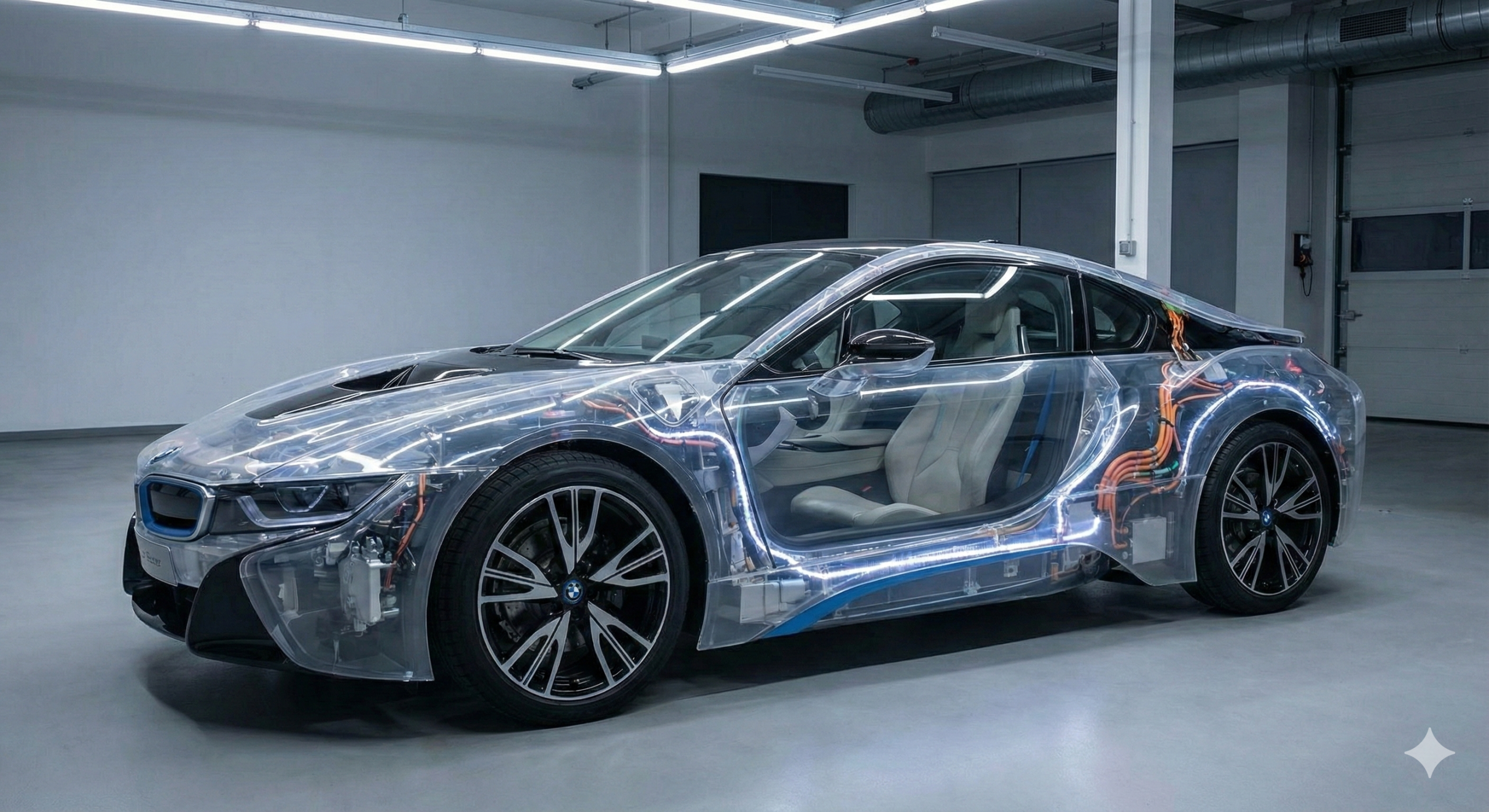
Automotive wiring terminals
Heat dissipation fins
Main console Type-C interface