
One-stop rapid change precision assembly line

Through vertical integration, we can quickly mobilize resources to integrate production and assembly lines and add visual inspection and automated assembly to achieve rapid delivery.

Shin - Yao Co., Ltd. – A Comprehensive Manufacturing Integration Expert

Shin – Yao Co., Ltd. We have long transcended the definition of a single plastic injection molding plant, transforming into a comprehensive manufacturing integration expert. Through strategic alliances with like-minded suppliers, we have expanded into diverse fields such as metal stamping and silicone rubber products, achieving rapid supply chain integration and resource consolidation.

On the production side, Shin-Yao combines flexible manual assembly lines with highly efficient automated assembly machines, and implements high-precision visual inspection machines for strict quality control. From integrated manufacturing to finished product assembly, we provide a one-stop service model to ensure that we bring our customers an absolute competitive advantage of “high quality and short lead time,” making us the strongest support for your product development.

Manual assembly line VS Automated assembly

798

Manual assembly lines: The flexible cornerstone of manufacturing

Manual assembly lines break down the manufacturing process into continuous workstations, where operators use their hands and tools to perform standardized tasks. Their greatest strength lies in their adaptability. When faced with product design changes or line replacement requirements, manual assembly lines do not require expensive equipment modifications; only personnel training and fixture adjustments are needed. This high flexibility makes them the best solution for handling "small-batch, high-variety" orders and precision customized products.

Extremely high production flexibility(Flexibility)

Humans are highly adaptable, and when faced with “small-batch, high-variety” orders, they can change lines and adjust processes much faster than automated equipment that requires reprogramming or modification.

Human hands have tactile feedback, making them able to easily handle soft materials (such as organizing wires and applying tape) or assemble fragile, irregularly shaped parts, which is difficult for machines to imitate at low cost.

Without the need for huge investments in purchasing dedicated machines and system integration, businesses can retain cash flow and flexibly adjust manpower allocation according to peak and off-peak seasons, reducing operational risks.

Automated assembly: the core of Industry 5.0 production

Automated assembly refers to a production model that utilizes robotic arms, sensors, and control systems to assemble products with minimal human intervention. Its core value lies in standardization and continuity. Through process control, machines can perform repetitive actions at extremely high speeds, eliminating human error. This is crucial in mass production, ensuring not only consistent product quality but also serving as the cornerstone of high efficiency and economies of scale in modern manufacturing.
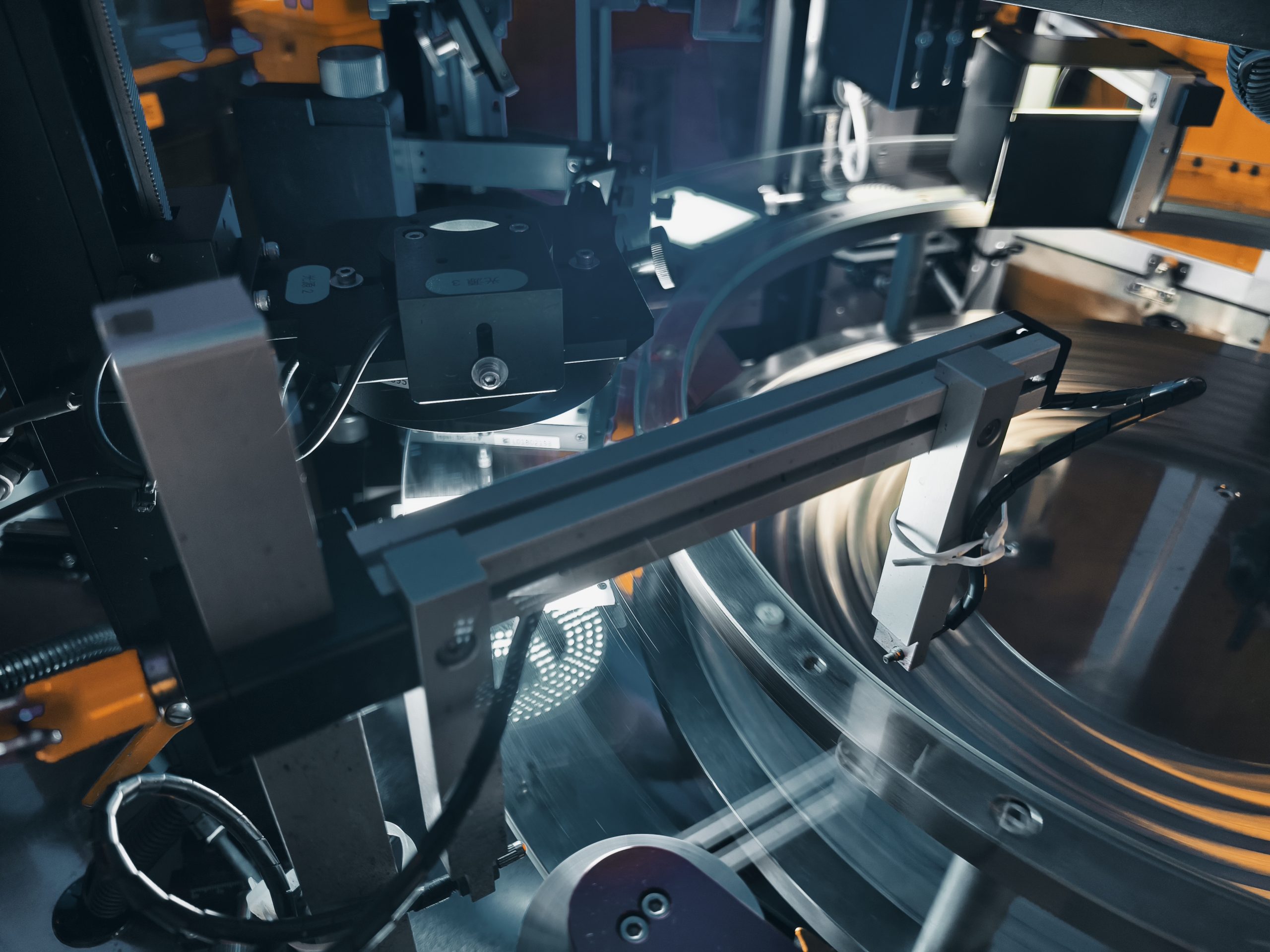
Extremely high quality consistency(Consistency)

The machine can repeat the same actions with micron-level precision, completely eliminating quality fluctuations caused by human fatigue, emotions, or distraction, and significantly reducing the defect rate.

Automated equipment can operate 24 hours a day without stopping, without the need for meals or shift changes, and its production cycle time is much faster than that of manual labor, enabling it to quickly process large numbers of orders.

It can replace humans in dangerous environments with high temperature, toxic solvents, dust or high load, freeing people from “dangerous, dirty and hard” (3K) work and reducing the risk of workplace injury.

CCD high-precision visual inspection

CCD(Charge-Coupled Device)Visual inspection is an automated technology that uses industrial cameras to replace human eyes for quality control. By capturing product images through high-resolution CCD sensors and then analyzing them through computer software, it can quickly perform dimensional measurements, surface defect detection (such as scratches and dirt), and part positioning.

Its core advantage lies in its precision and speed, surpassing that of the human eye. The CCD system can identify minute defects at the micrometer (µm) level and is unaffected by fatigue or subjective judgment, ensuring highly consistent inspection standards. This makes it a key technology for industries such as semiconductors, precision electronics, and medical devices to achieve 100% inspection and improve yield rates.

Contact us if needed!